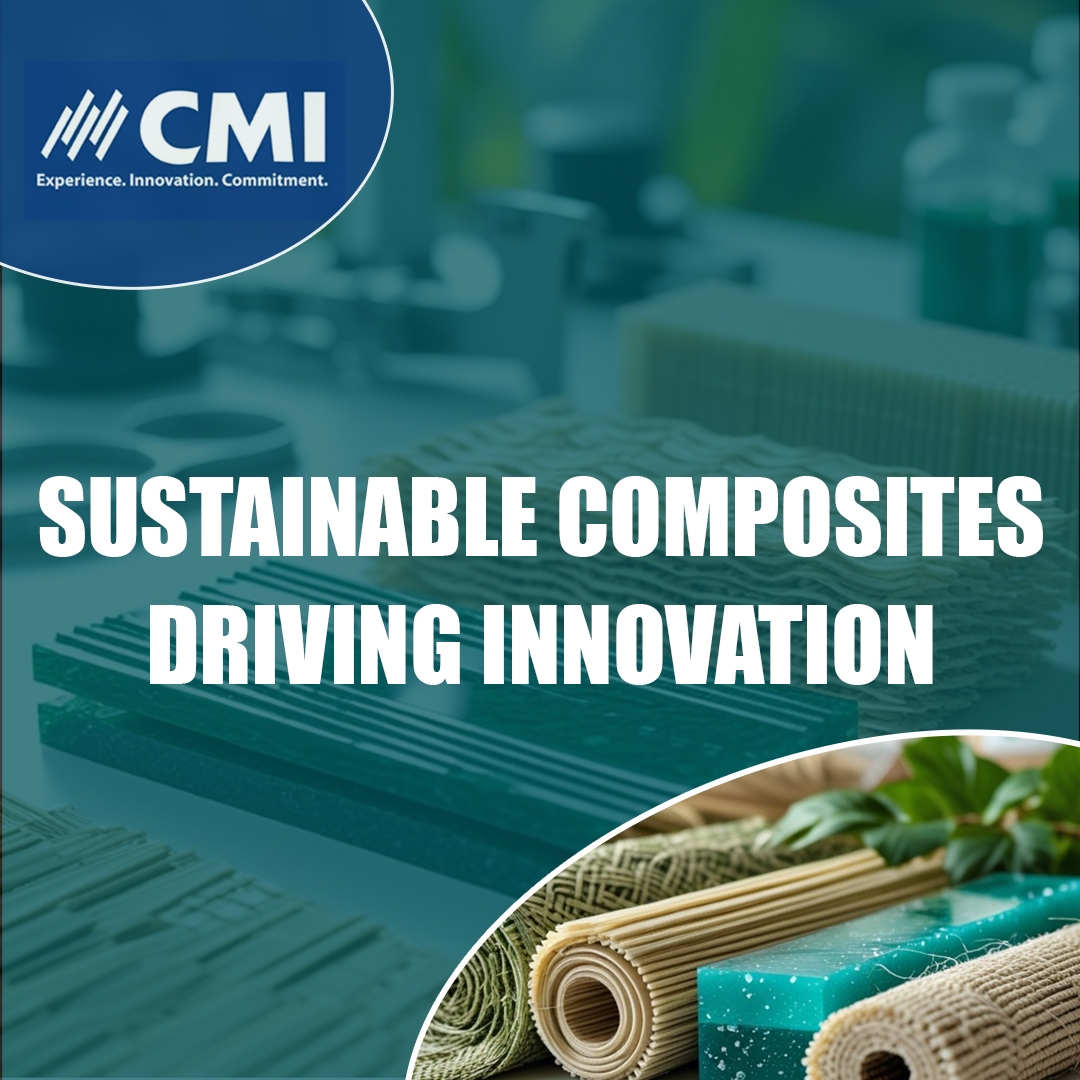
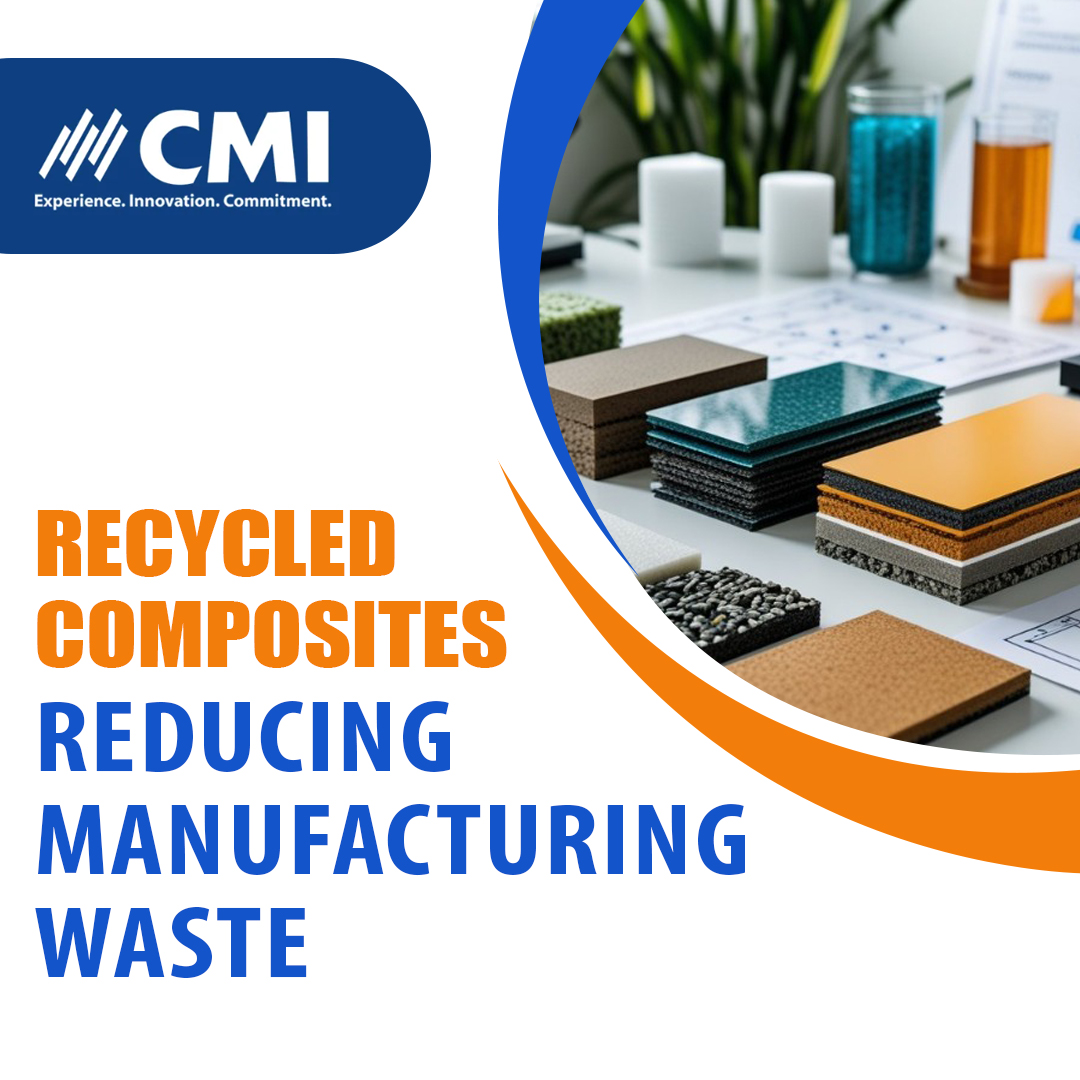
Sustainable composites are transforming the manufacturing landscape by offering an eco-friendly and cost-effective alternative to traditional materials. By recycling used composite parts such as wind turbine blades, boat hulls, and car panels, companies can create new composite materials that retain up to 90% of the original fiber strength while using up to 70% recycled content. This not only dramatically reduces waste but also cuts material costs, helping businesses achieve both economic savings and environmental goals. As industries increasingly prioritize sustainability, adopting sustainable composites supports circular economy practices, conserves resources, and minimizes landfill impact, making it a smart and responsible choice for the future of production.
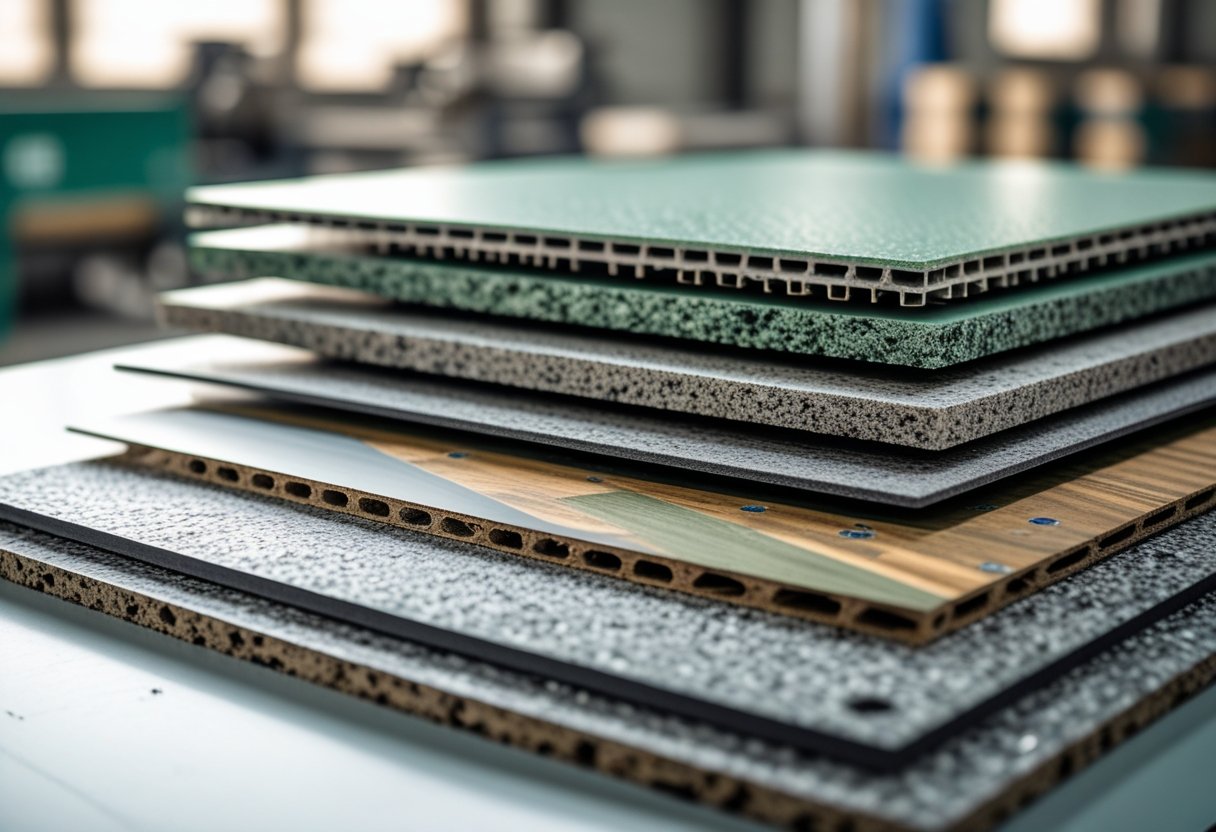
Manufacturers and engineers actively embrace recyclable composites as a powerful solution for both environmental and economic challenges. They transform used composite parts, like wind turbine blades, boat hulls, and car panels, into new materials that recover up to 90% of the original fiber strength while incorporating 70% recycled content. Stricter environmental regulations and rising disposal costs drive this shift. Cutting-edge methods such as pyrolysis and chemical dissolution enable companies to separate fibers from resins and reuse them efficiently. These innovations highlight how recyclable composites showcase human ingenuity and propel materials science forward while supporting sustainability and circular economy goals.
Key Takeaways
- Recycled composites can maintain up to 90% of original fiber strength through advanced processing methods.
- Companies use both chemical separation and physical repurposing to create new products from composite waste.
- A compelling combination of environmental regulations and significant cost savings drives the growing adoption of composite recycling technologies.
Fundamentals of Recycled Composites

Recycled composites maintain essential structural properties while reducing environmental impact through material recovery processes. These materials differ from virgin composites in their processing methods and performance characteristics, but they offer significant advantages for circular economy applications.
Definition and Key Characteristics
Recycled composites are materials created by recovering and reprocessing waste composite components. Composite recycling methods include pyrolysis, mechanical recycling, and chemical processes that extract valuable fibers and matrix materials.
The recycling process separates reinforcement fibers from polymer matrices. Carbon fibers maintain 80-95% of their original strength after proper recycling. Glass fibers retain similar mechanical properties when processed correctly.
Recycled composites exhibit different fiber orientations compared to virgin materials. The recycling process typically creates shorter fiber lengths. This changes the material’s directional strength properties.
Recycled fiber composites can retain up to 93% of their original performance depending on the recycling method used. Chemical recycling preserves fiber properties better than mechanical grinding methods.
Understanding the differences between virgin and recycled composites is crucial. While virgin composites use new raw materials with controlled fiber placement and length, recycled composites contain recovered fibers with varied lengths and random orientations.
Virgin composites use new raw materials with controlled fiber placement and length. Recycled composites contain recovered fibers with varied lengths and random orientations.
Fiber Length:
- Virgin composites: Continuous or predetermined lengths
- Recycled composites: Shortened fibers from processing
Mechanical Properties: Virgin materials offer predictable strength values. Recycled composites show 10-20% reduced strength in primary load directions. However, they maintain good compression and shear properties.
Cost Structure: Recycled composites cost 20-40% less than virgin materials. Energy requirements drop by 60-80% during production. Raw material costs decrease significantly through the utilization of waste streams.
Processing Requirements: Virgin composites are processed according to established manufacturing procedures. Recycled materials need additional sorting and preparation steps. Quality control becomes more complex with the inclusion of recycled content.
Types of Materials Used
Thermoplastic recycling offers the most straightforward recycling path through mechanical, thermal, and chemical methods. These materials can be melted and reformed multiple times without significant degradation.
Carbon Fiber Composites: Carbon fiber reinforced plastics (CFRP) represent high-value recycling targets. Chemical recycling processes using supercritical fluids recover premium carbon fibers. These fibers command high prices in secondary markets.
Glass Fiber Composites: Glass fiber materials dominate composite waste streams. Mechanical grinding produces short glass fibers for use as fillers. Chemical dissolution recovers longer fibers, which are suitable for new composite production.
Thermoplastic Matrix Systems: Polypropylene, polyethylene, and polyamide matrices enable multiple recycling cycles. These systems support circular materials use through repeated melting and reforming processes.
Bio-Based Composites: Natural fiber composites use hemp, flax, and jute reinforcements. These materials offer complete biodegradability or composting options. Bio-based matrices, such as PLA and PHA polymers, break down naturally.
Recycling Methods and Technologies
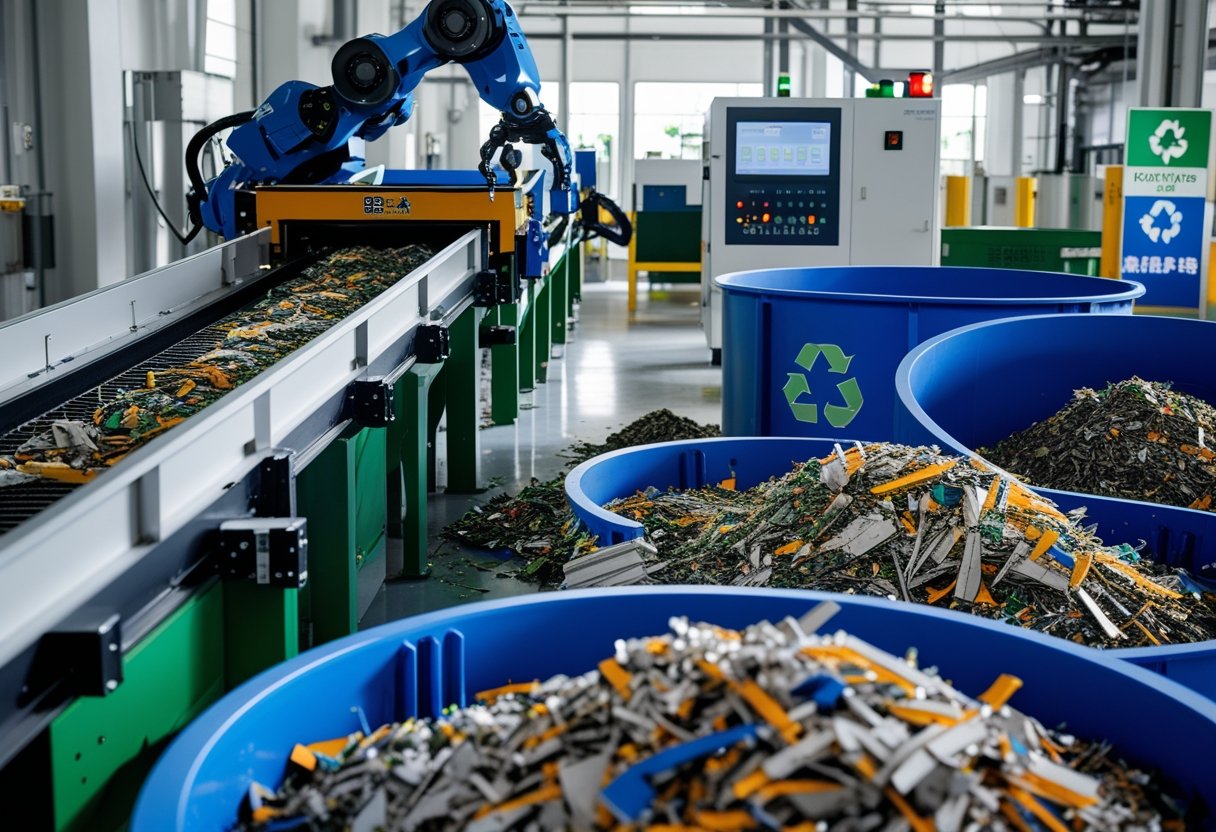
Several established methods exist for processing composite waste materials. These approaches range from basic shredding techniques to advanced chemical processes that separate individual components for reuse and recycling.
Mechanical Recycling
Mechanical recycling represents one of the most established methods for processing composite waste. This approach involves shredding waste materials into smaller pieces that can be repurposed for new applications.
The process begins with crushing or grinding composite materials into fragments of various sizes. These fragments typically range from fine powders to larger flakes depending on the intended end use.
Key advantages include:
- Lower energy requirements compared to thermal methods
- Simple equipment needs
- Cost-effective processing
- Immediate availability of recycled material
However, mechanical recycling faces significant limitations. The process damages fiber length and reduces the mechanical properties of the recycled composite quality. Separation of different composite types proves difficult during processing.
Applications for mechanically recycled composites include concrete reinforcement, filler materials, and low-strength structural components. The recycled material typically retains 20-40% of its original strength properties.
Chemical and Pyrolysis Processes
Chemical recycling breaks down composite materials at the molecular level to recover individual components. Hot acetic acid treatment shows promise for deconstructing epoxy resins while preserving the integrity of the fibers.
Pyrolysis uses high temperatures (400-600°C) in oxygen-free environments to decompose polymer matrices. This thermal recycling process leaves behind clean carbon fibers that retain most of their original properties.
Chemical recycling methods include:
- Solvolysis using acids or bases
- Fluidized bed pyrolysis
- Microwave-assisted pyrolysis
- Supercritical fluid extraction
The recovered fibers maintain 85-95% of their original strength after chemical processing. However, these methods require a significant amount of energy input and specialized equipment.
Recent innovations focus on reducing processing temperatures and improving fiber surface properties during recovery.
Cement Co-processing
Cement co-processing utilizes composite waste as an alternative fuel and raw material in the production of cement. The high temperatures in cement kilns (1400-1500°C) completely destroy organic components while incorporating inorganic fibers into the cement matrix.
This method handles mixed composite waste streams without requiring separation or preparation. Glass fibers become an integral part of the cement chemistry, potentially enhancing certain properties.
Energy recovery occurs as organic matrices combust, providing heat for the cement process. This reduces fossil fuel consumption in the cement manufacturing process.
The process accepts contaminated composites that other recycling technology innovations cannot handle effectively. However, it represents a lower-value recycling option since materials cannot be recovered for reuse.
Innovations in Fiber Recovery
Advanced fiber recovery techniques focus on maintaining fiber properties while enabling efficient separation from polymer matrices. New thermoplastic composite recycling methods enable repeated processing without significant loss of properties.
Hybrid recycling approaches combine multiple techniques to maximize material recovery. For example, initial mechanical processing followed by chemical treatment can optimize both fiber length and surface quality.
Emerging technologies include:
- Plasma-assisted recycling
- Bio-based matrix dissolution
- Automated sorting systems
- Surface treatment for fiber reactivation
These innovations extend composite lifespan through multiple recycling cycles. Some hybrid methods achieve fiber recovery rates exceeding 90% while maintaining 80-85% of original mechanical properties.
Smart recycling systems utilize sensors and artificial intelligence to optimize processing parameters for various composite types, thereby enhancing the quality of recycled composites across multiple waste streams.
Benefits and Environmental Impact
Recycled composites deliver significant environmental advantages through waste reduction and lower manufacturing emissions. Chemical recycling methods reduce costs by over 58% while substantially cutting greenhouse gas emissions.
Reduction in Manufacturing Waste
Manufacturing processes generate substantial composite waste that traditionally ends up in landfills. Recycled composites address this problem by converting waste materials into valuable products. By utilizing additive manufacturing materials, manufacturers can further reduce waste, conserve energy, and promote circular economy models.
Recycling waste into composite materials prevents the development of harmful gases, such as methane and CO2, in landfills. This process stops the creation of dangerous microparticles that enter water systems and food chains.
Key waste reduction benefits include:
- Diverting composite materials from landfills
- Converting human hair, face masks, and textile waste into functional materials
- Eliminating incineration-related pollution
- Preventing microplastic infiltration into ecosystems
Companies save money by using waste materials as raw inputs instead of virgin materials. The cost of waste materials remains extremely low compared to new synthetic alternatives.
Lowering Environmental Footprint
Recycled composites significantly reduce lifecycle emissions compared to virgin materials. Manufacturing recycled carbon fiber composites cuts greenhouse gas emissions by 90% to 95% during their second life cycle.
Energy consumption drops dramatically when companies use recycled materials. Sustainable composite technology offers reduced material weight and lower energy consumption throughout production processes.
Environmental impact reductions:
- 90-95% lower greenhouse gas emissions
- Decreased energy requirements for production
- Reduced carbon footprint across supply chains
- Less pressure on natural resource extraction
Recycled plastics save landfills from plastic waste while lowering overall environmental impacts compared to virgin alternatives.
Promotion of Sustainable Production
Recycled composites play a crucial role in advancing circular economy strategies by improving resource efficiency and reducing waste generation. This approach creates closed-loop manufacturing systems.
Supply chain sustainability improves when manufacturers incorporate recycled materials into production cycles. Companies reduce their dependence on virgin raw materials while maintaining product quality and performance standards.
Resource efficiency increases as waste materials become valuable inputs for new products. Recycled composites conserve natural resources and minimize waste generation while reducing overall carbon footprints.
Sustainable production advantages:
- Enhanced resource efficiency across operations
- Improved supply chain resilience
- Reduced reliance on virgin material extraction
- Creation of circular manufacturing loops
Companies achieve cost savings while meeting environmental goals by adopting recycled composite materials.
Challenges and Limitations
Recycled composites face significant barriers that limit their widespread adoption and effectiveness. The material complexity of composites creates technical hurdles, while contamination control and fiber degradation reduce material quality during processing.
Technical and Economic Barriers
Composite recycling challenges stem from the bonded structure of different materials that resist separation. Mechanical recycling breaks down composite fibers through grinding and shredding processes. Chemical recycling requires high temperatures and specialized equipment.
Processing costs often exceed the value of recovered materials. Energy-intensive thermal methods can cost $200 to $ 400 per ton to operate. Chemical solvolysis processes require expensive solvents and controlled environments.
Fiber degradation occurs during most recycling methods:
- Mechanical processing: Reduces fiber length by 30-50%
- Thermal treatment: Damages fiber surfaces at high temperatures
- Chemical breakdown: Can weaken fiber-matrix bonds
Current recycling technologies struggle with the recycling of mixed composite types. Different resin systems require separate processing methods. This creates logistical problems for recycling facilities.
Quality and Performance Concerns
Recycled composite materials show reduced mechanical properties compared to virgin materials. Tensile strength typically drops by 20-40% after recycling. Impact resistance decreases due to shorter fiber lengths.
Contamination control presents major quality issues—metal fragments from processing equipment mix with recycled fibers. Moisture absorption during storage degrades material properties. Cross-contamination between different composite types can affect the final product quality.
Performance variability makes recycled composites difficult to use in critical applications. Aerospace and automotive industries require consistent material properties. Quality testing adds extra costs to recycling processes.
Innovation in recycling focuses on preserving the integrity of fibers. New chemical processes aim to dissolve only the resin matrix, leaving the other components intact. Advanced sorting technologies help separate different composite types before processing.
Market and Supply Chain Limitations
Recycling logistics pose significant barriers to the collection of composite waste. Wind turbine blades require specialized transport due to their size. Collection costs often exceed the material recovery value.
Supply chain gaps limit recycled composite adoption:
| Challenge | Impact |
| Collection networks | Limited geographic coverage |
| Processing capacity | Insufficient facilities |
| Quality standards | Lack of industry specifications |
| Market demand | Low acceptance for recycled content |
Natural fiber-reinforced polymer composites show promise but face challenges in achieving market acceptance. Manufacturers prefer virgin materials for guaranteed performance. Price competition with virgin composites limits demand for recycled materials.
Regulatory frameworks remain underdeveloped in many regions. Waste classification rules vary between countries. This creates barriers to international trade in composite waste.
Applications of Recycled Composites
Recycled composites find widespread use across automotive manufacturing, construction projects, and consumer product development. These materials reduce costs while maintaining performance standards in many commercial applications.
Automotive Industry Uses
The automotive sector leads in adopting recycled composite materials for various components. Car manufacturers use these materials in door panels, interior trim pieces, and underhood parts.
Recycled composites reduce costs for automotive companies while meeting strict safety standards. The materials work well in non-structural parts where weight reduction is a priority.
Common automotive applications include:
- Dashboard components
- Seat backs and frames
- Wheel well liners
- Engine covers
Recycled carbon fiber performs well in moderate-stress applications. High-performance recycled carbon fiber composites show some property loss but remain suitable for many automotive uses.
Electric vehicle manufacturers increasingly use recycled composites. These materials help reduce vehicle weight and manufacturing costs. Battery housings and body panels benefit from the properties of recycled composites.
Construction and Building Materials
Construction companies use recycled composites in both structural and decorative applications. The materials resist moisture and chemicals better than traditional building materials.
Recycled carbon fiber in cement composites exhibits significant improvements in properties. This application strengthens concrete structures while using waste materials.
Building industry applications include:
- Reinforcement bars for concrete
- Exterior cladding panels
- Roofing materials
- Bridge deck components
Recycled composites are well-suited for use in harsh environments. They resist corrosion from salt water and chemicals. This makes them ideal for coastal construction projects and industrial facilities.
The materials also provide thermal insulation benefits. Building owners see reduced energy costs over time. Fire resistance properties meet most building codes when the material is appropriately treated.
Consumer Products and Furniture
Consumer goods manufacturers create a variety of products using recycled composites. Sports equipment companies lead this market, with products such as tennis rackets, bicycle frames, and golf clubs.
Recycled composite products include pellets, fabric, and finished goods. These materials maintain good strength-to-weight ratios for consumer applications.
Popular consumer applications include:
- Outdoor furniture frames
- Laptop and phone cases
- Kitchen appliances
- Garden tools and planters
Furniture makers value recycled composites for outdoor products. The materials resist weather damage and UV exposure. They require less maintenance than wood or metal alternatives.
Electronic device manufacturers utilize recycled composites in the protective cases of their devices. The materials provide impact protection while reducing product weight. This supports the circular economy by giving waste materials new life in consumer products.
Future Trends and Innovations
The recycled composites industry stands at a critical turning point. Automation and robotics are making recycling faster and more efficient, while regulatory pressures drive companies to adopt sustainable practices and circular economy models.
Circular Economy Approaches
Manufacturing companies are implementing closed-loop systems that keep composite materials in continuous use. These systems capture waste at production facilities and process it back into usable materials.
The automotive sector leads this transformation. Companies now design vehicles with end-of-life recycling in mind. The automotive industry is increasingly incorporating recycled carbon fiber composites into structural components, body panels, and interior parts.
Key circular economy strategies include:
- Material passport systems that track composite components throughout their lifecycle
- Take-back programs where manufacturers collect used products
- Design for disassembly principles that simplify material separation
Aerospace manufacturers are developing similar programs. They collect retired aircraft components and extract valuable carbon fibers for new applications.
Construction companies create building-to-building material flows. Demolished structures provide recycled composites for new construction projects.
Emerging Research and Development
AI-driven and hybrid recycling techniques are being explored for their potential to optimize processes and enhance material recovery. Machine learning algorithms now identify different composite types and direct them to optimal recycling pathways.
Advanced processing methods show promising results:
| Technology | Application | Benefits |
| Enzymatic recycling | Thermoset breakdown | Low energy use, high fiber quality |
| Microwave pyrolysis | Carbon fiber recovery | Faster processing, reduced emissions |
| Solvent-based systems | Matrix dissolution | High material purity |
Research teams are developing bio-based recycling methods. Microbial and enzymatic recycling leverages biological agents to break down composite materials.
Universities partner with industry to scale laboratory processes. Pilot plants test new recycling technologies before they are deployed commercially.
Smart sorting systems utilize artificial intelligence to identify material types instantly. These systems increase recycling efficiency by 40% compared to manual sorting.
Potential for Expanded Market Adoption
Market demand for recycled composites is growing as companies face increasingly stringent environmental regulations. The European Union’s circular economy action plan requires higher recycling rates across industries.
Recycled composites utilize materials that have been previously used, thereby reducing waste and conserving energy compared to producing new materials from scratch. This cost advantage drives adoption in price-sensitive markets.
Market expansion factors include:
- Government incentives for using recycled materials
- Corporate sustainability targets requiring recycled content
- Consumer preference for environmentally responsible products
Wind energy companies create large markets for recycled composites. Decommissioned turbine blades are used as materials for new infrastructure projects.
Sports equipment manufacturers integrate recycled carbon fiber into high-performance products. Bicycles, tennis rackets, and golf clubs now contain recycled composite materials.
Building codes in several countries now recognize recycled composites for structural applications. This regulatory approval opens construction markets worth billions of dollars.
Supply chains adapt to handle recycled materials. New collection networks gather composite waste from multiple industries and process it at centralized facilities.
Frequently Asked Questions
What are the common methods used in the recycling of composite materials?
Composite materials can be recycled through different methods depending on the material type. Thermoplastic composites use grinding processes to break parts into small particles.
These particles mix with virgin materials in injection molding machines. The process creates new products while maintaining material quality.
Mechanical recycling involves shredding materials into fine particles. These particles serve as fillers in new composite products.
Thermoset composites require specialized equipment that separates the reinforcing fibers from the resin. The fibers serve as reinforcement material for various other applications. The resin and filler portions work as fillers in various products.
Chemical recycling breaks down the polymer matrix using solvents or heat. This method recovers individual components for reuse in manufacturing.
How does the recycling process impact the mechanical properties of composite materials?
Recycling typically reduces the strength and stiffness of composite materials. Fiber length decreases during grinding and processing operations.
Shorter fibers provide less reinforcement than continuous fibers in virgin materials. The random orientation of recycled fibers also affects performance compared to aligned fiber structures.
Contamination from previous applications can compromise the integrity of recycled composites. Matrix degradation during processing reduces bonding between fibers and resin.
Property retention varies depending on the recycling method and material type. Some processes maintain 60-80% of original strength properties.
Testing shows that recycled composites are effective for non-critical applications. They meet requirements for many secondary uses where high performance is not essential.
What is the environmental benefit of recycling composite materials compared to landfill disposal?
Recycling prevents composite waste from occupying landfill space for decades. Most composite materials do not break down naturally in landfills.
Energy recovery happens when recycled materials replace virgin raw materials. Manufacturing virgin composites requires more energy than processing recycled content.
Carbon emissions decrease through recycling programs. The process reduces the need for new material production and associated emissions.
Fiber recovery eliminates the need to produce new reinforcement materials, as glass and carbon fiber production require significant energy input.
Recycling reduces the mining and extraction of raw materials. This protects natural resources and reduces environmental damage from material sourcing.
Can recycled composite materials be used in the manufacturing of new products, and if so, in what industries?
Construction industries use recycled composites for non-structural applications. These include panels, decking materials, and insulation products.
Automotive manufacturers incorporate recycled composites in interior components. Door panels, dashboards, and trim pieces often contain recycled content.
Marine applications include boat hulls and deck components made with recycled materials. The materials resist water damage while reducing costs.
Furniture makers use recycled composites for outdoor and indoor products. Garden furniture and office components benefit from the material properties.
Sports equipment manufacturers create products using recycled carbon fiber. Bicycle frames and sporting goods incorporate these materials successfully.
Infrastructure projects use recycled composites for utility covers and grating. Bridge components and walkways also utilize these materials.
What are the economic considerations and potential cost savings of recycling composite materials?
Processing costs for recycled composites are typically lower than virgin material production. Energy requirements decrease during recycling operations.
Raw material costs drop when recycled content replaces virgin materials. Companies save money on fiber and resin purchases.
Transportation costs increase when collecting and moving waste materials to recycling facilities. Collection infrastructure requires initial investment.
Labor costs vary depending on the recycling method used. Automated processes reduce long-term labor expenses.
Market demand affects the economic value of recycled composites. Strong demand creates better pricing for recycled materials.
Equipment investment requires significant upfront capital. Recycling machinery and facility setup costs impact profitability.
Waste disposal savings occur when materials are sent for recycling instead of being sent to landfills. Companies avoid tipping fees and disposal costs.
What challenges and limitations currently exist in the recycling of composite materials?
Separation of different composite types creates processing difficulties. Mixed materials require sorting before recycling can begin.
Contamination from adhesives, paints, and other substances complicates the recycling process. Cleaning processes add time and cost to operations.
Limited recycling infrastructure restricts material processing capacity. Few facilities handle composite recycling on a commercial scale.
Quality standards for recycled composites remain inconsistent across industries. Specifications vary between manufacturers and applications.
Collection networks for composite waste are underdeveloped. Transportation from waste sources to recycling facilities needs improvement.
Energy requirements for recycling and emission standards create operational challenges. Regulatory compliance adds complexity to recycling operations.
Economic viability depends on material volumes and market prices. Small-scale operations often struggle with profitability.