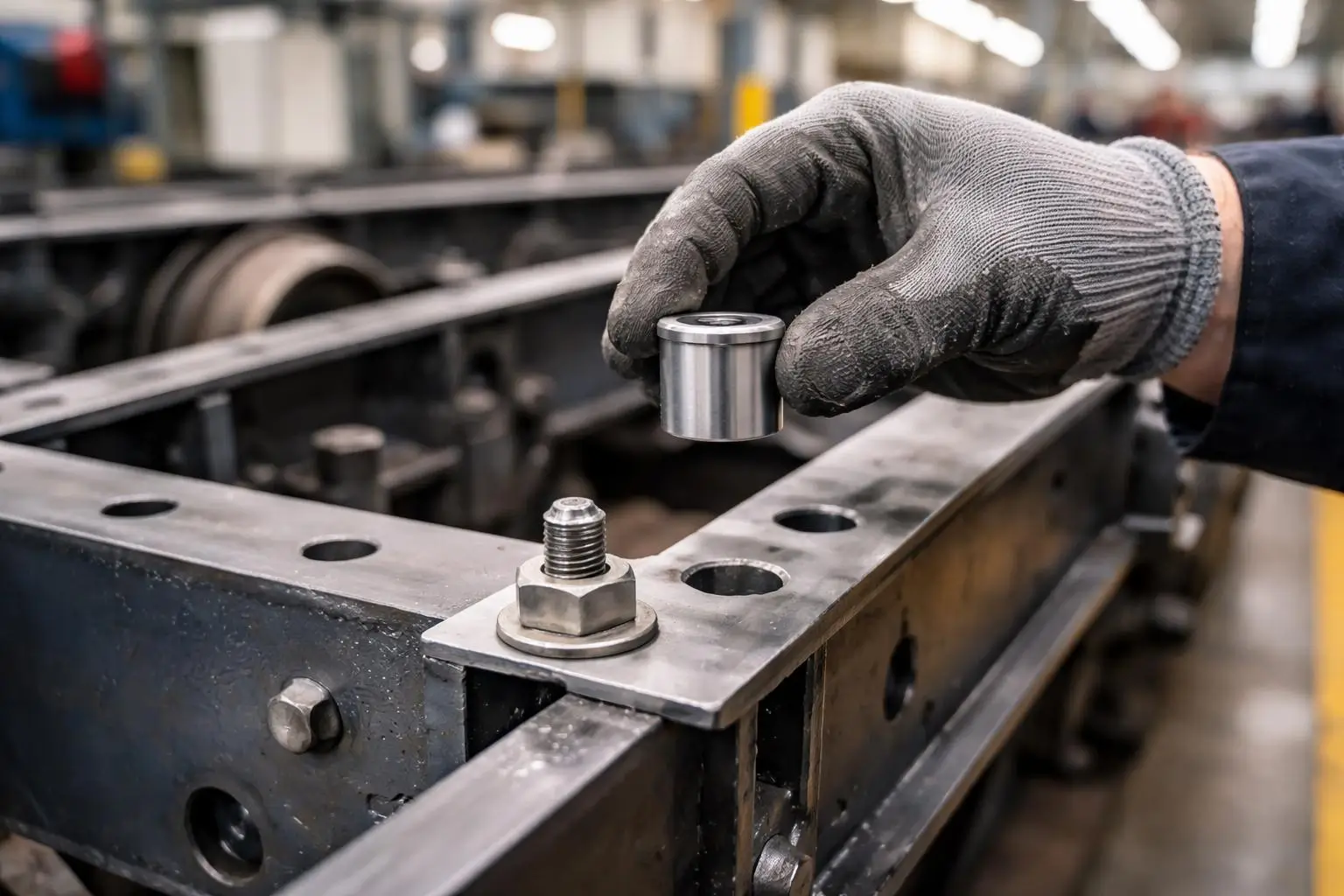
Transportation equipment depends on more than large frames, motors, housings, and power systems. Small fabricated parts—including insulators, cable cleats, terminal blocks, connectors, spacers, covers, and structural supports—often determine whether a larger assembly fits correctly, maintains electrical separation, and performs reliably over time.
These essential components may be physically small, but they often carry specific mechanical, electrical, or material requirements. A cable cleat must hold its position under vibration. A terminal block must provide a dependable interface within a control assembly. An electrical insulator must separate conductive elements without compromising fit or long-term stability. When a component is out of tolerance, made from an unsuitable material, or difficult to replace, it can create larger maintenance and performance challenges.
Custom Materials Inc. (CMI) supports transportation and defense-related industrial customers with custom metal fabrication, electrical insulation components, engineered plastics, composites, and higher-level assemblies. CMI’s transportation applications include rail equipment, aircraft systems, buses, automobiles, and hybrid propulsion technologies.
What Are Small Isolated Components?
Small isolated components are custom transportation components that separate, support, align, connect, or protect elements within a larger assembly. They are not standalone products. Instead, these precision parts are integrated into transportation equipment, electrical controls, motor assemblies, power-conversion equipment, and other systems where reliable fit, electrical isolation, and material performance matter.
Common examples include:
- Electrical insulators and barriers
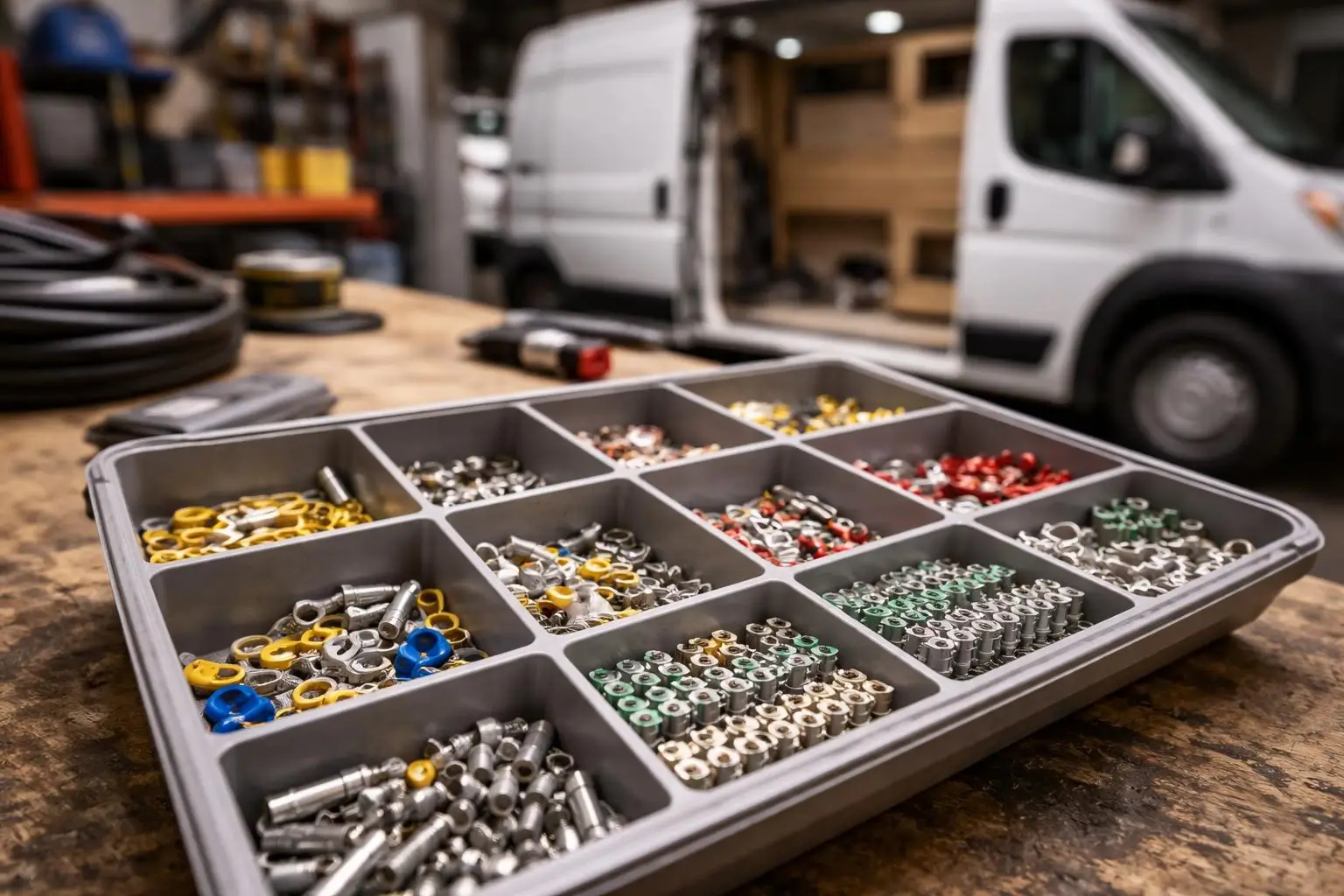
- Terminal blocks and copper terminals
- Cable cleats and cable guides
- Spacers, wedges, and liners
- Connectors, plugs, and receptacles
- Protective covers and enclosure components
- Motor-control supports
- Insulated end laminations
- Composite structural supports
- Replacement parts for legacy transportation equipment
In transportation fabrication, small isolated components perform specific functions inside a larger mechanical or electrical assembly. An electrical insulator can create controlled separation between conductive elements. A spacer can maintain the required distance between mechanical parts. A terminal block or connector can provide a secure interface between electrical connections, controls, and supporting structures.
CMI supports transportation equipment and electrical control assemblies with custom-fabricated electrical components, electrical insulation materials, metal parts, engineered plastics, and composite components. Transportation applications can include rail systems, aircraft controls, buses, automobiles, inverter components, and hybrid-drive assemblies.
The value of these essential components comes from how they perform within the complete system. Transportation equipment may experience vibration, movement, heat, electrical load, moisture, and extended service cycles. These operating conditions can affect component fit, connector performance, material stability, and long-term reliability. For example, electrical connector performance in rail vehicles can be affected by vibration and corrosion over time.
For this reason, precision fabrication should reflect the actual operating environment of the final assembly. The right fabrication process, material, dimensions, and mounting approach help custom transportation components maintain reliable fit and function in demanding applications.
Why Precision Parts Matter in Transportation Equipment
The transportation industry relies on integrated electrical and mechanical systems. Whether the application involves a rail vehicle, transit power assembly, commercial aircraft system, bus, automobile, or hybrid drive, each part must work with the surrounding components.
A small precision component can affect a system in several ways.
Electrical isolation and controlled interfaces
Many transportation applications require materials that provide electrical isolation while maintaining mechanical support. Electrical insulation components can help separate conductive elements, support terminal connections, or protect an interface within a larger control assembly.
For example, Custom Materials lists terminal blocks for electric motors and controls, insulators for aircraft control boards, third-rail insulation components, inverter components, and insulated winding supports for hybrid drives among its transportation applications.
These precision components may function within electrical controls, motor assemblies, and power-conversion equipment. Their requirements vary by application, but the fabrication objective remains the same: produce a component that fits correctly, supports the intended electrical or mechanical function, and performs reliably in its operating environment.
An electrical isolator or insulating support should not be treated as a generic part. Material selection, thickness, geometry, mounting features, and tolerances can influence electrical isolation, mechanical stability, and the fit of the final assembly. In high-voltage and power-conversion applications, insulation material and physical separation are central to reliable circuit isolation and safety compliance.
Mechanical alignment and fit
Precision parts also help maintain physical alignment. A support, spacer, terminal block, connector, or cable guide may influence how components fit together during assembly and how they remain positioned during use.
When a component does not meet critical dimensional requirements, an assembly can become harder to install, more difficult to service, or less dependable in operation. This is especially important for replacement components used in older transportation equipment, where the new part must fit an existing system rather than a new build.
Precision fabrication helps customers avoid unnecessary rework by identifying which dimensions, materials, and fabrication methods are necessary for the part’s intended use. The goal is not to add complexity. It is to produce a component with the level of control the application actually requires.
Durability in demanding environments
Transportation equipment is often exposed to repeated vibration, motion, temperature changes, and extended duty cycles. Small parts and components that guide, secure, isolate, or protect other elements must maintain their shape and position through those conditions.
CMI supports transportation fabrication projects ranging from replacement cable cleats for New York City transit-car traction motors to reverse-engineered knife-switch and contactor components for the San Francisco Trolley System. Additional transportation applications include rail insulation, aircraft control-board insulators, motor-control terminal blocks, bus and automotive copper terminals, inverter components, and hybrid-drive winding supports.
These examples show why a small component should be evaluated as part of its larger system. The most effective fabrication solution considers the part’s geometry, its material needs, how it attaches, and the environment in which it will operate.
Transportation Parts and Components CMI Supports
Sheet metal remains important in the transportation industry. It can be used for covers, brackets, guards, enclosures, mounting features, and structural components. However, transportation fabrication is not limited to sheet metal parts.
CMI’s work is especially suited to projects that require a combination of metal fabrication and nonmetallic materials. A single assembly may include metal parts for structure or conductivity, electrical insulation materials for separation, engineered plastics for low weight or corrosion resistance, and composite components for application-specific support.
Rail and Public Transportation Components
Public transportation systems often remain operational for decades. Over time, transit agencies may need replacement parts that are no longer available from the original equipment manufacturer. Drawings may be incomplete, material specifications may be outdated, or the original fabrication process may no longer be practical.
CMI can support reverse-engineering projects by using 3D scanning and CAD modeling to document an existing part. When an original material is obsolete or difficult to identify, the team can help evaluate alternate materials and develop a replacement component suited to the application.
For rail and transit applications, this may involve cable-management components, electrical insulation, contactor-related parts, supports, or custom components that must work within an established assembly. The result is not simply a copy of an old part. It is a fabricated solution built around fit, material performance, and manufacturability.
Aircraft, Bus, Automotive, and Hybrid-Drive Applications
Transportation equipment includes a wide range of electrical and mechanical applications. Custom Materials supports terminal blocks for electric motors and controls, insulators for aircraft control boards, copper terminals and insulators for buses and automobiles, and insulated end laminations and winding supports for hybrid drives.
These applications demonstrate the importance of small precision components in systems that handle electrical connections, motion, motor control, or power conversion. A fabricated part may need to serve as a connector, support, protective barrier, or interface between multiple elements in an assembly.
The correct fabrication process depends on the part. Custom Materials can machine, cut, form, drill, turn, coat, kit, and support other operations needed to produce custom components and assemblies.
Metal Fabrication and Material Selection
Metal fabrication is an important part of Custom Materials’ capabilities, but it is most effective when paired with a clear understanding of the application. Some transportation components need the strength, conductivity, mounting features, or structural properties of metal. Others need electrical isolation, reduced weight, corrosion resistance, or a nonmetallic material that performs better in the specific environment.
The fabrication and engineering capabilities of Custom Materials Inc. support a broad range of processes, including sawing, turning, drilling, tooling, kitting, and value-added production operations. The company works with more than 2,500 materials, giving customers more flexibility when selecting a practical material for a custom component.
When metal parts are appropriate
Metal parts may be selected when the application requires:
- Structural support
- Conductivity
- Durable mounting features
- A protective cover or enclosure
- Compatibility with an existing metal assembly
- A welded or mechanically fastened subassembly
For more complex projects, Custom Materials can support assemblies that combine ferrous and non-ferrous metals with plastics, composites, insulation materials, and hardware.
When nonmetallic materials are the better choice
Engineered plastics, composites, and electrical insulation materials can be strong candidates when a component must provide electrical separation, low weight, corrosion resistance, or specific performance characteristics. These materials can be fabricated into spacers, supports, terminal components, cable-management parts, barriers, and covers.
The best choice is not automatically metal or plastic. It depends on what the part must do within the larger transportation system.
Defense-Related Industrial Component Fabrication
CMI also supports defense-related industrial applications with specialized fabricated components and engineered assemblies. This work should be understood at the component level. CMI is not positioned as a weapons manufacturer; it supports customers that need custom materials, precision parts, electrical insulation, fabricated metal components, and assemblies for demanding applications.
Defense-related industrial projects can involve many of the same requirements found in transportation fabrication:
- Controlled dimensions and reliable assembly fit
- Material traceability and documented processes
- Replacement-part development
- Components that perform under demanding conditions
- A combination of metal, plastic, composite, and insulating materials
- Engineering support for complex or unusual fabrication requirements
CMI has experience producing high-quality plastic components for demanding applications, including seals, gears, and rollers. Its broader fabrication capabilities allow the team to select the production method that makes the most sense for the component, rather than forcing every project through a single process.
Traceability and Engineering Support
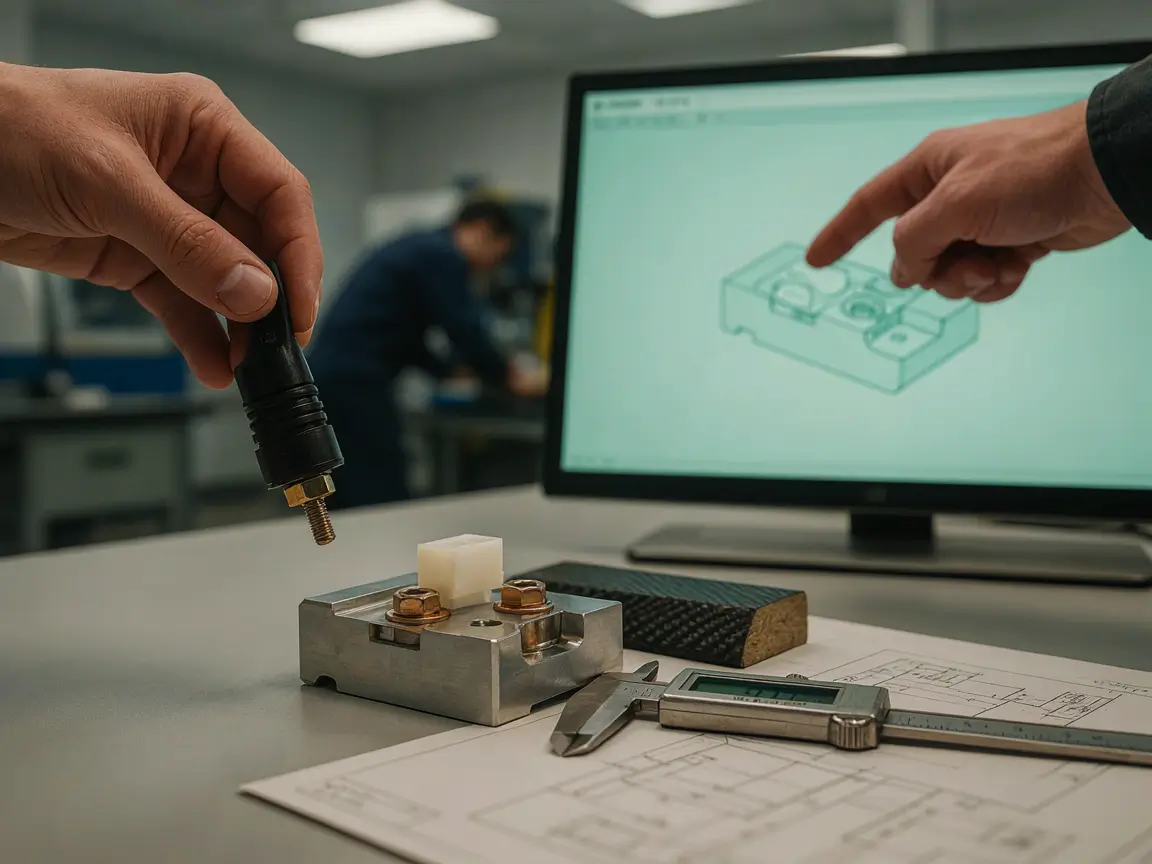
Small components can require a high level of control because their function may depend on specific materials, dimensions, and installation requirements. CMI supports this need with planning, engineering collaboration, and systems that can maintain material lot traceability.
Custom Materials Inc. states that its MRP system provides raw-material lot traceability and that its quality system is regularly audited in support of ISO 001:2008 registration. For customers, this can provide useful visibility into the materials and processes associated with a fabricated component.
Custom Materials’ engineering support can begin before production. Early review can help customers identify the best material, fabrication process, and assembly approach for a new part, an obsolete component, or a replacement project. This helps avoid designing a component that is difficult to fabricate, unnecessarily costly, or poorly matched to the final system.
A Practical Partner for Custom Transportation Components
Small isolated components can have a significant effect on transportation equipment and defense-related industrial systems. Whether the part is an insulator, terminal block, cable cleat, connector, spacer, cover, support, or replacement component, it must perform reliably within the larger assembly.
Custom Materials Inc. helps customers address those requirements through custom metal fabrication, electrical insulation components, engineered plastics, composites, reverse engineering, and assembly support. The company’s transportation experience includes rail systems, public transportation, aircraft controls, bus and automotive components, and hybrid-drive applications.
When a project involves difficult material requirements, a complex interface, obsolete components, or a need for reliable fit and repeatable fabrication, Custom Materials can help evaluate the challenge and develop a practical path to production.
Frequently Asked Questions
What are small isolated components in transportation systems?
Small isolated components are custom parts that separate, support, align, connect, or protect elements within a larger transportation assembly. Examples include electrical insulators, terminal blocks, cable cleats, spacers, connectors, protective covers, and motor-control supports. These components help larger transportation systems maintain reliable fit, electrical separation, and mechanical stability.
Why do precision parts matter in transportation equipment?
Precision parts matter because small variations can affect assembly fit, electrical clearances, vibration resistance, and long-term component performance. In transportation equipment, a cable guide, insulating support, terminal block, or spacer must match the requirements of the larger assembly to help reduce rework, maintenance issues, and replacement challenges.
What processes are used in metal fabrication for transportation components?
Metal fabrication for transportation components can include cutting, drilling, turning, forming, stamping, machining, welding, coating, and assembly. The right fabrication process depends on the part’s material, geometry, tolerances, production volume, and function within the final transportation system. CMI supports a range of fabrication and engineering operations, including turning, drilling, sawing, tooling, kitting, and value-added processing.
What challenges are involved in manufacturing small precision components?
Manufacturing small precision components can involve challenges with dimensional control, secure fixturing, material selection, assembly fit, inspection, and repeatable production. Small parts can have intricate geometry or critical features, so the fabrication method must be selected around the component’s actual function rather than its physical size alone.machinedesign+1
What materials are used for transportation components?
Transportation components may be fabricated from metals, electrical insulation materials, engineered plastics, composites, or combinations of those materials. Metal parts can provide strength, conductivity, or structural support, while nonmetallic materials may provide electrical isolation, reduced weight, corrosion resistance, or application-specific performance. CMI supports components and assemblies that combine metallic and nonmetallic materials.
Can CMI help replace obsolete transportation components?
Yes. CMI can support replacement-part projects through 3D scanning, CAD modeling, reverse engineering, material evaluation, and custom fabrication. This process can be useful when original drawings are unavailable or when an original material is obsolete or difficult to identify. CMI has used these capabilities to support transportation-component replacement work.